
Why Some Patients Are Disqualified at Consultation — and What to Do About It
One of the complaints that has come up in few Nuvia reviews is understandably frustrating. A patient goes over their medical history on a phone call, makes a long drive, sits down for a consultation — and within minutes, hears that they're actually not a candidate based on something that could have been easily found out on the phone.
While it isn’t common for this to happen, the frustration when it does is legitimate. Phone screening is meant to catch disqualifying factors early. When it doesn't, the patient pays the price in time and travel.
What's worth understanding is why these appointments happen in the first place. — and what you can do to make the most of your trip and consultation.
Table of Contents

Why Phone Screening Has Limits
The screening call is designed to identify clear disqualifiers: patients who are obviously not candidates based on what they share over the phone. It catches a lot. But there are factors it can't fully assess without an in person visit.
Some disqualifying factors only become visible once Nuvia has a complete clinical picture — a CT scan, a full medication review, and a look at bone structure and density that can't be predicted from a phone conversation alone.
For example, certain combinations of medications and health conditions may be discussed on the phone but might not be fully understood in context. Or bone loss could be much more significant than a patient realizes — these are things that may only become clear in person.
That's a real limitation of the screening call. It's also not unique to Nuvia — it's a difficulty of phone-based dental screening in general. But being clear, thorough, and honest on the phone can help protect your time when you come in for a consultation.
What a Screening Call Should Cover
A thorough pre-screening call typically covers the following. If yours doesn't go this deep, it can be a good idea to ask more questions or offer more information, especially if you don’t live close to a Nuvia. This is exactly the conversation that determines whether making the trip is worth your time.
NOTE: You won’t have a screening call until after you’ve taken the 60-second candidacy quiz to see if you may be a candidate. Take the quiz here.
Your current dental situation: How many teeth are you missing? How many are failing, cracked, or infected? Are you currently in dentures — full or partial? The screening team should get a clear picture of the state of your mouth, not just a summary.
Your medical history: This is where pre-screening could have the potential to fall short and lead to a patient feeling like they’ve wasted their time coming in for a consult.
Be detailed. Conditions that can affect candidacy include uncontrolled diabetes, autoimmune conditions, active cancer treatment, and certain heart conditions. Don't assume a condition is irrelevant — share it and let the screening team assess.
Your current medications: Some medications directly affect implant candidacy.
Bisphosphonates (commonly prescribed for osteoporosis — brand names include Fosamax and Boniva) can significantly impact bone healing around implants. Blood thinners, immunosuppressants, and certain other medications are also important to share about. Share your full medication list, including supplements.
Whether you smoke: Smoking affects healing and implant integration meaningfully. Be honest about this — it matters for the success of your implants.
Your expectations for the consultation itself: Ask explicitly: what happens at the consultation? Who will I meet with? What would disqualify me that you can assess right now? The more direct you are, the more useful the call becomes.
Remember, it doesn’t help anyone if you aren’t fully honest during the screening call.
What Actually Disqualifies Someone
Not everyone is a candidate for full-arch dental implants, and it's worth knowing the most common disqualifying factors before your consultation.
You only need one or two teeth replaced. Full mouth dental implants are designed for patients missing most or all of the teeth in an arch, or dealing with an arch of failing teeth. If your situation is more limited, a different procedure may be the right fit.
Uncontrolled systemic health conditions. Uncontrolled diabetes, for example, affects healing and raises surgical risk significantly. Conditions need to be managed — not necessarily absent — but active and uncontrolled issues are typically a disqualifier until they're addressed.
Certain medications. As noted above, bisphosphonates and some other medications can make implant integration significantly more complex or not recommended. This is one of the factors that's hardest to assess fully over the phone — the impact depends on dosage, duration, and clinical context.
Not enough bone volume. All-on-4® is specifically designed to work with low bone levels— the angled implant placement is part of what makes it possible for patients with bone loss. But there is a point below which implants can't safely fuse with the bone, and that threshold can only be fully assessed with imaging done at a consultation.
General health factors affecting surgical safety. Full-arch dental implants involve general anesthesia and surgery lasting several hours. Conditions that would make that unsafe are evaluated as part of the clinical review.
What the Consultation Actually Looks Like
The consult moves through imaging, clinical review, and a financial planning discussion — in that order.
The CT scan is taken early and reviewed by a doctor to confirm candidacy. If you're a candidate, a meaningful portion of the visit covers cost and financing, which surprises some patients expecting a purely clinical experience.
No decisions from you as a patient are required the same day or any timeline other than your own.
Before You Make the Drive
If you're considering traveling to a Nuvia consultation, a few things worth doing first:
Request a detailed pre-screening call, not just an intake form. Ask specifically about what would disqualify you given your situation.
Share your full medication list during the call, not a summary.
Be specific about your medical history — name conditions, don't just describe symptoms.
Ask whether there's anything in what you've shared that raises a concern about candidacy.
The phone screening process works best when patients share as much as possible. The more the screening team knows before your appointment, the better equipped they are to tell you honestly whether the trip makes sense.
The first step is to get a no-commitment sense of whether you might be a candidate before calling anyone, the 60-second eligibility quiz below is a good place to start.
Real People, Real Results
Don't just take our word for it. See what our patients have to say about their life-changing transformations.
See If You May Be a Candidate with the 60-Second Quiz
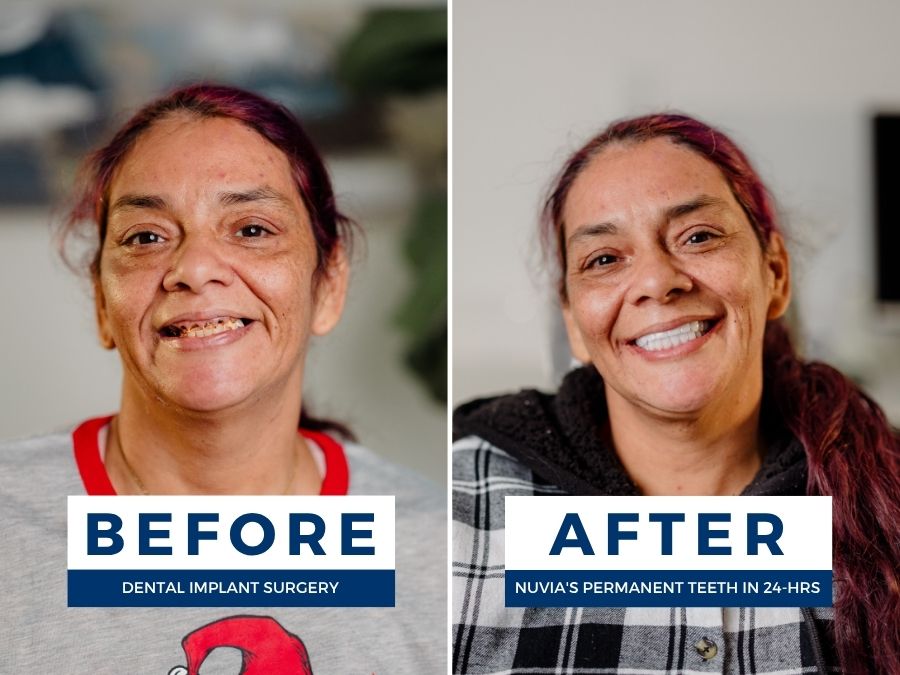
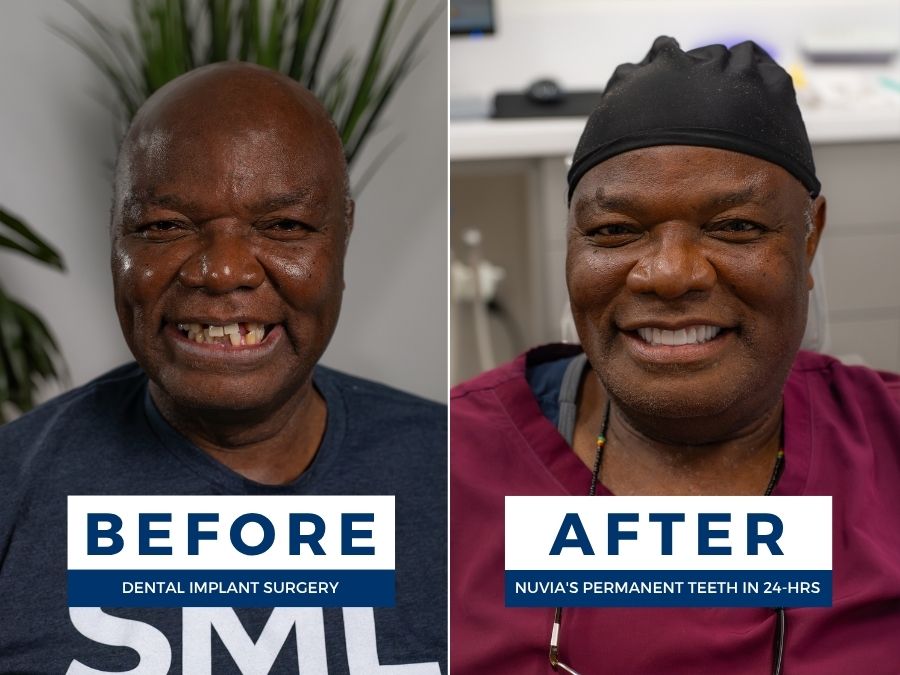
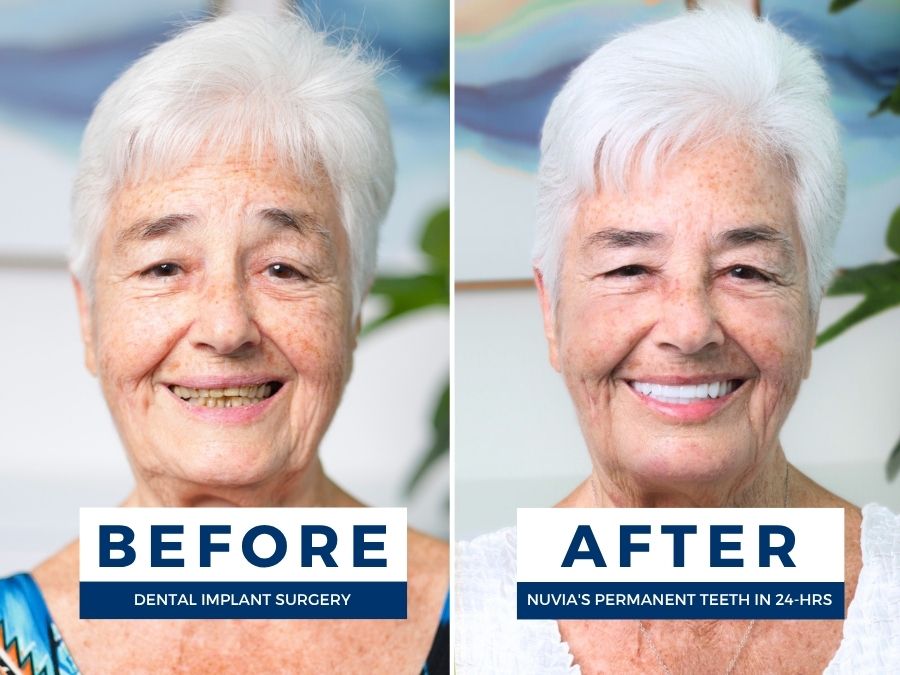
See The Difference For Yourself
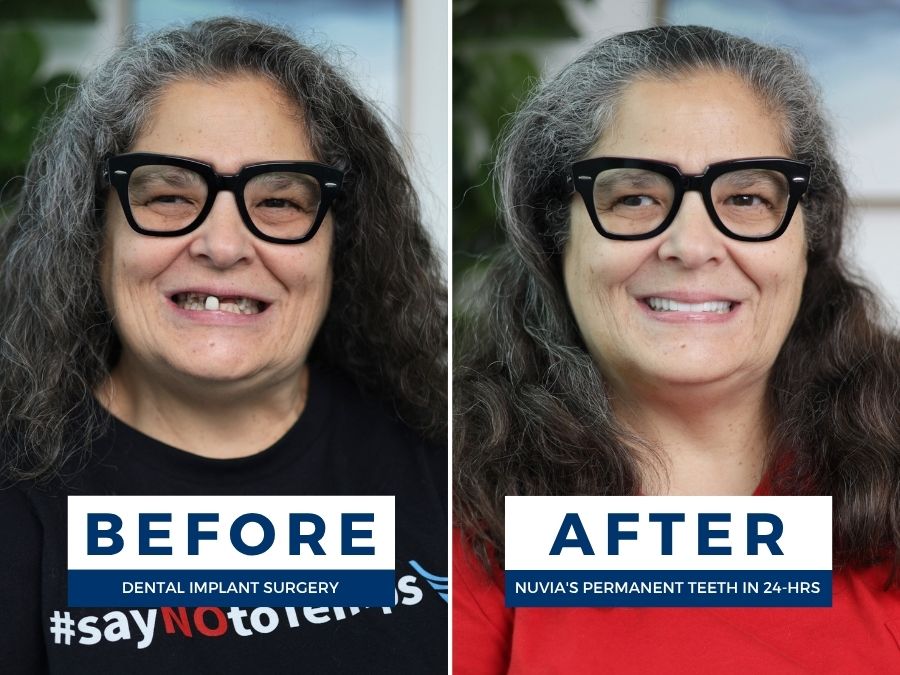
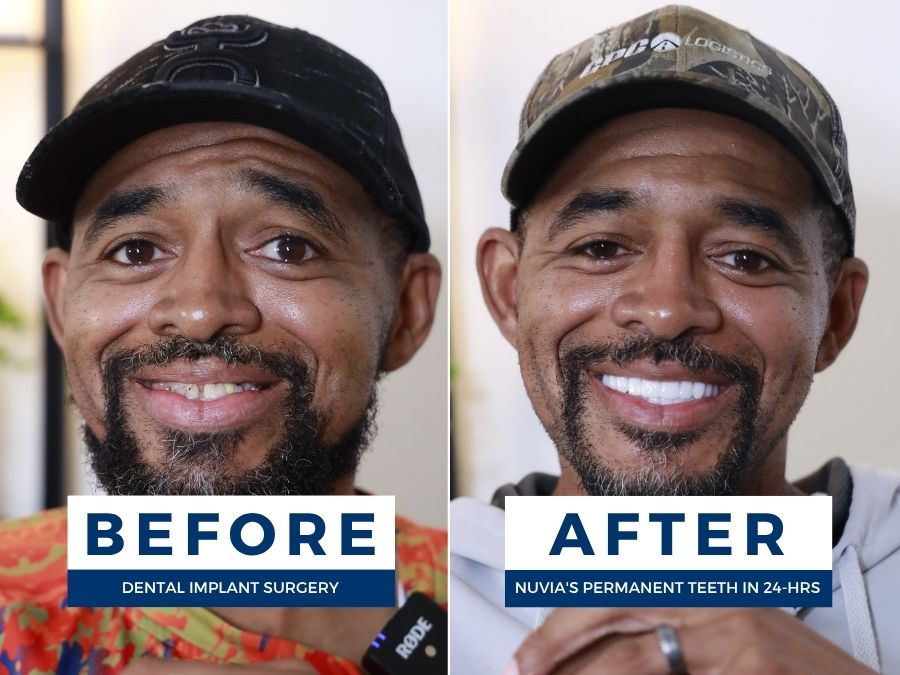
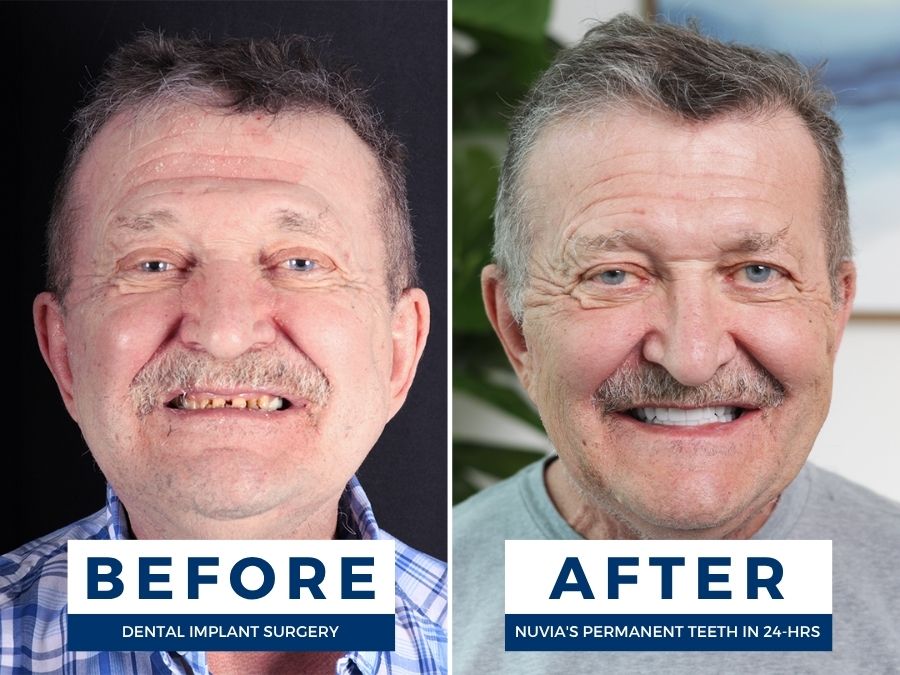
Real patient transformations achieved in just one day with Nuvia's revolutionary technology.
NUVIA HAS BEEN FEATURED ON:




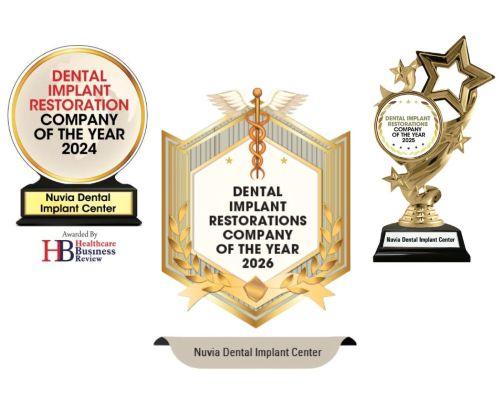
Nuvia Named 2024, 2025, & 2026 Top Dental Implant Company of the Year
After reviewing top dental implant companies in the country, the Healthcare Business Review names Nuvia 2024, 2025 & 2026 Dental Implant Restoration Company for three consecutive years for its innovative permanent teeth in 24 hour process. Find out what is shared by the best dental implant companies here.

Nuvia Dental Implant Centers are locally owned and operated by licensed dental practitioners. These locally owned and operated practices are part of a professional network of dental implant centers operated by prosthodontists, oral surgeons, and restorative dentists. Each Nuvia Dental Implant Center has a business affiliation with Nuvia MSO, LLC, a Dental Support Organization that provides non-clinical support to each center. *Nuvia Dental Implant Centers are able to provide patients with a bridge made with an FDA approved permanent material, zirconia, in 24-hours. No temporary denture. Not all those who come in for a consultation are medically cleared to receive permanent zirconia teeth in 24-hours. Follow up appointments are required to confirm implant integration and make adjustments if necessary. Results may vary in individual cases. Patients represented in videos are actual NUVIA patient(s) and may have been compensated for their time in telling their story.
Licensed in "Management Services For Dental Company" license number: 5509C. Dr. Preston Hansen | license number: 9924
*While soft foods immediately after surgery are generally approved by our clinical team, the local surgeon reserves the right to give individual instruction on dental implant aftercare according to the specific circumstances applicable to each case.
*To hear patient's speech after prosthetic placement please search Nuvia dental implant center on YouTube and watch patient stories. Individual results may vary